The list price is $48.95 but Amazon frequently discounts it at a variable rate.
A PDF is available for $14.95 on Payhip.
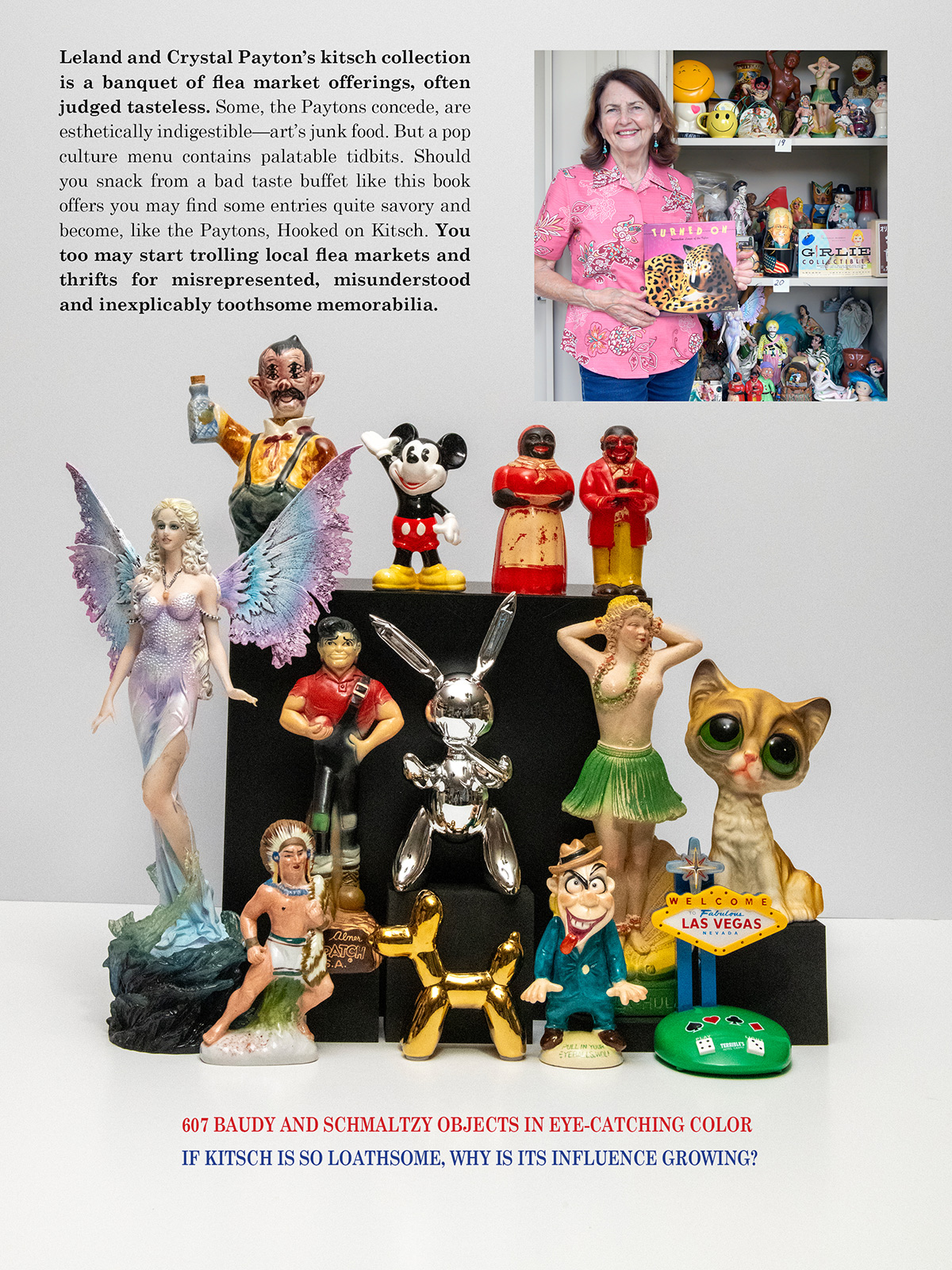
 Throwing a hissy fit over cheapjack thrift store gewgaws seems unwarranted to the authors of this profusely illustrated compendium of bad taste. Consumerism has produced myriad objects that display vulgarity or sentimentality—but the antique-picking Paytons contend appreciating kitsch shouldn’t be a criminal offense as its critics claim.
Really, what is wrong with corny ornaments? Granny cherished her cute little kitty knickknacks and she was a lovely person. Modernism, with its contempt for the pedestrian taste of the masses has worn out its welcome. Pop artists pointed out that commercial products can be graphically interesting. Postmodernists like Jeff Koons have blown up examples of commonplace products and sneaked them into galleries.
 Occasionally junk shop items are not dissimilar to multimillion dollar art objects. Don’t bother Christie’s with your antique mall Jasper Johns lookalike flag painting. Just decorate your living room. Your friends will be shocked at your esthetic acumen and wonder where you came up with $40 million.
This 259-page collection is a banquet of flea market fare the cultivated consider tasteless. Some are esthetically indigestible. Kitsch is art’s junk food, but it contains palatable tidbits. Readers may find some entrees savory and become Hooked on Kitsch. After perusing these pages, you too may start trolling local flea markets for misrepresented, misunderstood and inexplicably toothsome memorabilia.
This is a highly original examination of the esthetics and politics of good and bad taste – and whether in fact these distinctions matter as much as they once did. The art world and academia’s zest for creating a hierarchy of all human expression may be dated. Truth be told, almost everyone is attracted to some form of kitsch. This book gives you permission, if not universal forgiveness.
About the Authors
The writer Richard Rhodes introduced Leland to Crystal Merriam. Less than a year later they married. They have two adult sons, Strader, a Foreign Service Officer for the State Department, and Ross, a writer and podcaster.
 Leland’s participation in a lawsuit brought by the Environmental Defense Fund to stop or modify an unjustified gigantic dam on the Osage River angered its staunch supporter, Stuart Symington. Missouri’s senior senator pressured the University of Missouri Extension to release Leland from his job creating traveling photographic exhibits. Without a relationship to a nonprofit to receive foundation funds, the couple turned to picking antiques and collectibles, a precarious occupation at best.
 Familiarity with flea market merchandise led to writing three books on popular culture for major publishers. Leland pined for his Ozark homeland, so they moved back to Missouri. National publishers are disinterested in regional subjects. The Paytons’ Ozarks titles have been self-published. For illustrations they acquired memorabilia as they searched for folk art and Art Deco to sell. This book’s contents were acquired as a byproduct of dealing in better recognized antiquarian objects.


